🏵️State Symbols of Uttarakhand
The state chose its symbols from its own high country: a musk deer of the snowline, the nine-coloured monal, the sacred Brahma Kamal, the scarlet burans of spring and a peacock-winged butterfly.
| Symbol | Name | Scientific name |
|---|---|---|
| 🦌 State animal | Alpine Musk Deerकस्तूरी मृग | Moschus chrysogaster |
| 🦚 State bird | Himalayan Monalमोनाल | Lophophorus impejanus |
| 🪷 State flower | Brahma Kamalब्रह्म कमल | Saussurea obvallata |
| 🌺 State tree | Burans (Tree Rhododendron)बुरांश | Rhododendron arboreum |
| 🦋 State butterfly | Common Peacock | Papilio bianor |
🦌 Alpine Musk DeerMoschus chrysogaster
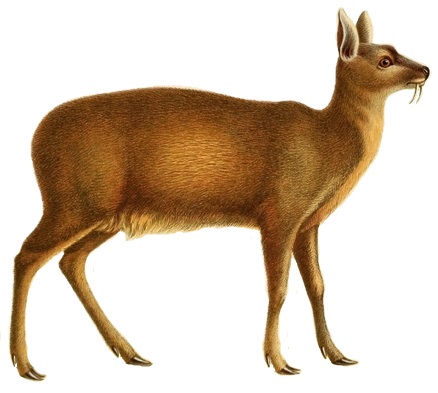
The kasturi mrig is a small, shy deer of the high Himalaya, living alone between roughly 2,500 and 4,500 metres in birch and rhododendron country. Males carry no antlers; instead they grow long canine tusks, and the musk pod that gives the deer its name made it one of the most poached animals in the mountains.
It is endangered, protected under Schedule I of the Wildlife Protection Act, and choosing it as state animal was a statement: Uttarakhand's identity is bound to its highest, most fragile wildlife. The deer survives in sanctuaries like Kedarnath Wildlife Sanctuary, which was established largely for it, and in the upper reaches of the great national parks.
🦚 Himalayan MonalLophophorus impejanus
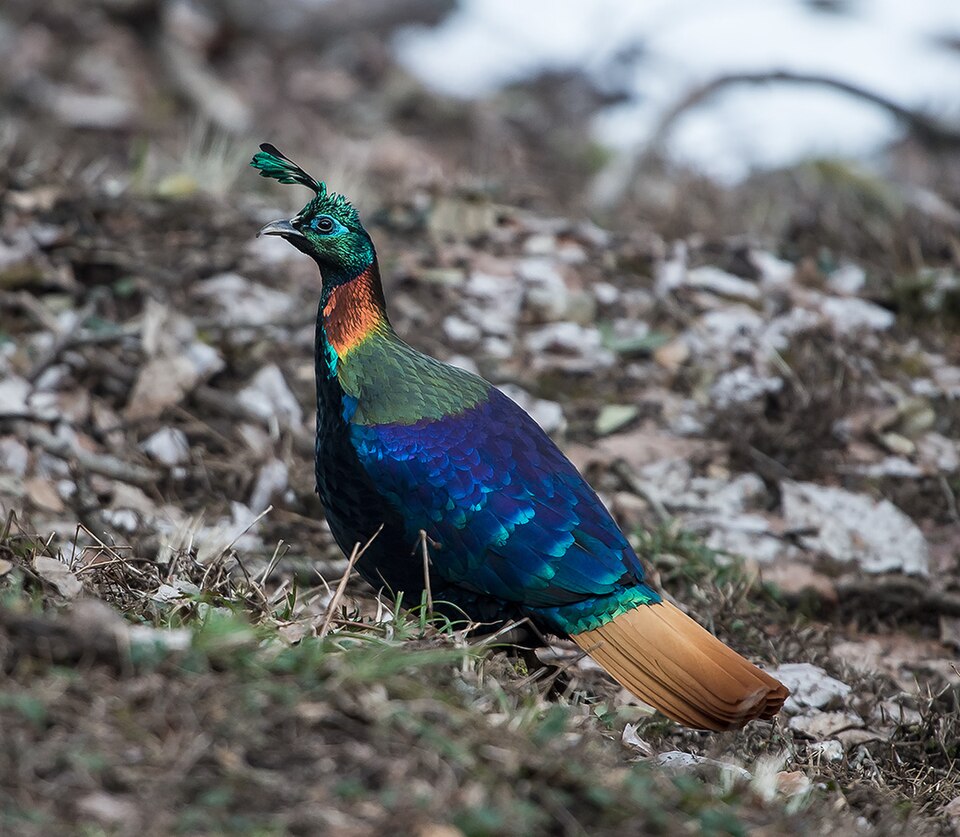
The monal is the Himalaya dressed as a bird: the male's plumage runs through nine iridescent colours, from a peacock-green crest to copper, violet and blue, and catching one crossing an alpine meadow is the birding highlight of any high trek. The female is a camouflaged brown, built for a nest among the rocks.
Monals live between about 2,400 and 4,500 metres, descending in winter, and their whistling call carries across the bugyals at dawn. They dig for tubers and insects in open slopes near the treeline, which is exactly where trekkers meet them on routes like Tungnath, Dayara Bugyal and the Valley of Flowers.
🪷 Brahma KamalSaussurea obvallata
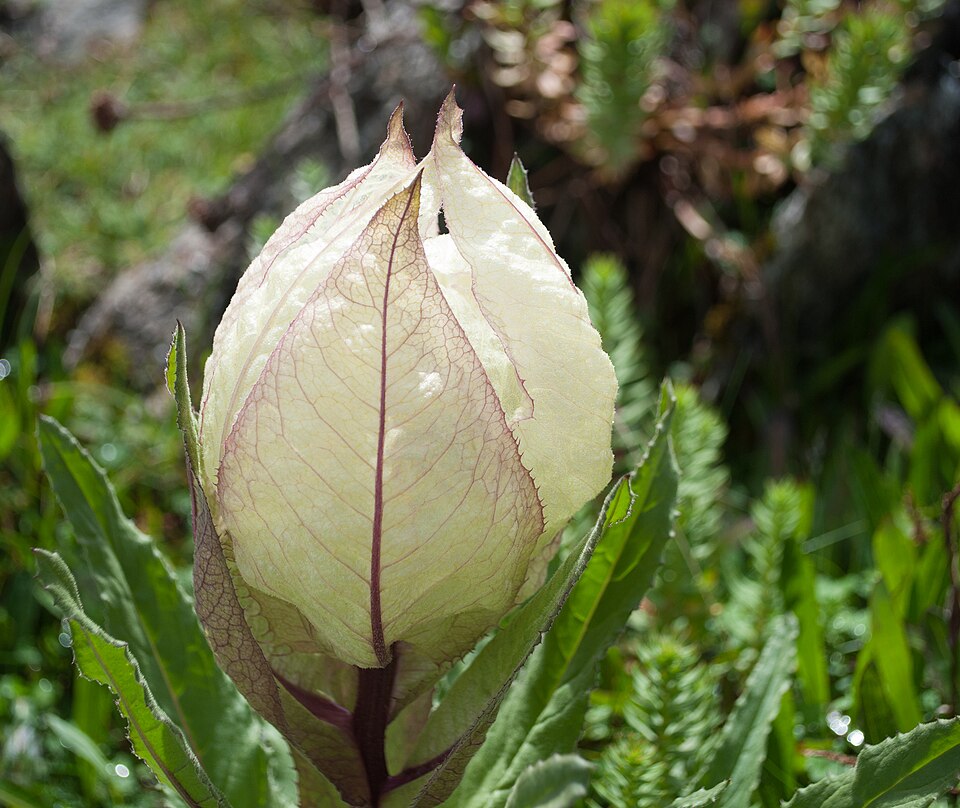
Brahma Kamal, the lotus of Brahma, is the most storied flower of the Himalaya. It is not a true lotus but a high-altitude saussurea whose purple flower heads grow sheathed in papery, boat-shaped bracts that glow pale yellow-green, blooming through the monsoon months between about 3,000 and 4,600 metres.
It is the flower of the gods in every sense: offered at Kedarnath and Badrinath, tied to the myth of Brahma's creation, and famously carpeting the Valley of Flowers and the slopes around Hemkund Sahib in August. Picking it is restricted; it is a protected plant, and its short, spectacular season is part of its aura.
🌺 Burans (Tree Rhododendron)Rhododendron arboreum
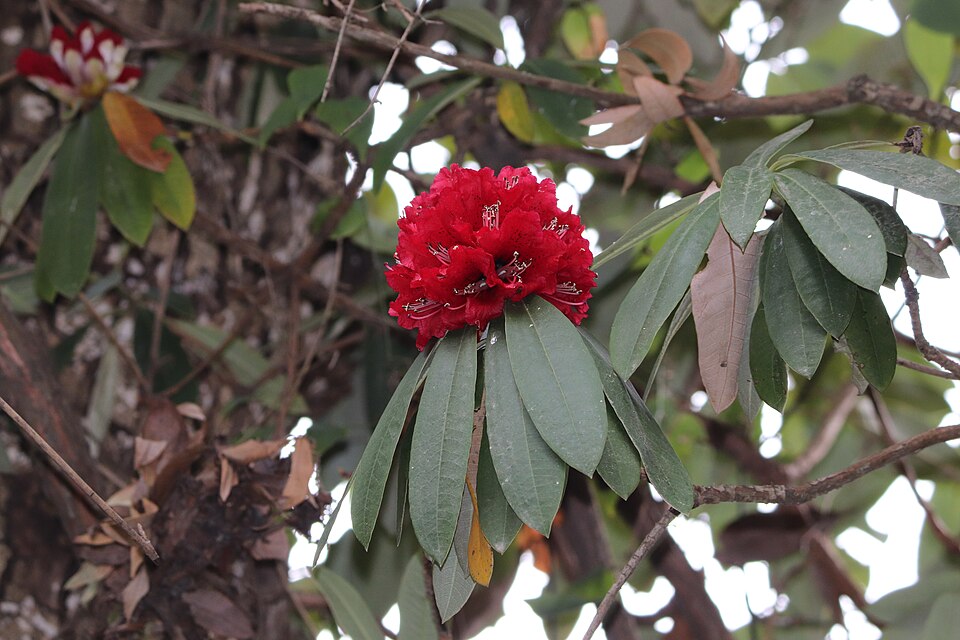
In March and April whole hillsides of Uttarakhand turn scarlet as the burans flowers. It is a rhododendron grown to tree size, the signature bloom of the mid-hills between about 1,500 and 3,000 metres, and the state's most loved tree.
The flowers are more than scenery: burans juice, pressed from the petals, is the hills' summer drink, and the tree marks the season the way cherry blossom does in Japan. Old mixed forests of burans, oak and deodar are the classic middle-Himalayan woodland, and spring treks are timed to walk through them in bloom.
🦋 Common PeacockPapilio bianor
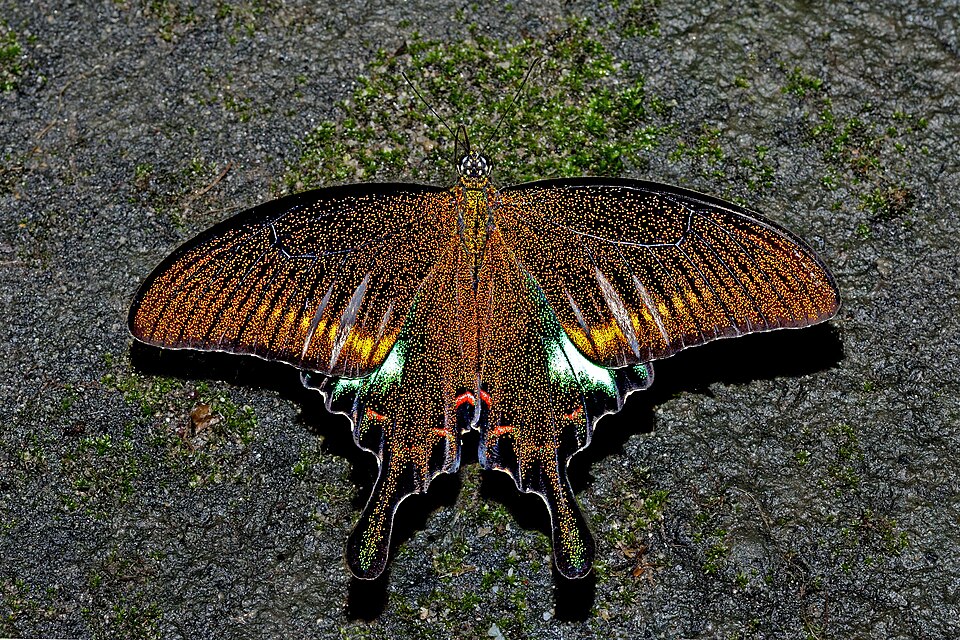
Uttarakhand was among the first Indian states to declare a state butterfly, choosing the common peacock in 2016: a large, dark swallowtail whose hindwings flash iridescent green and blue with peacock-eye spots.
It flies through the state's mid-altitude forests and gardens from spring to autumn, a common but genuinely beautiful insect, which was the point of the choice: conservation that starts with something everyone can actually see.
The musk deer and several plants here are legally protected. Observe wildlife from a distance and never pick Brahma Kamal or disturb nesting birds.