Ancient Uttarakhand
Prehistory to c. 600 CE · Rock art, the Kunindas and the land of the epics
Uttarakhand enters history early. Its rock shelters carry prehistoric paintings, its rivers appear in the epics as the gods' own country, and by the last centuries BCE the Kuninda kings were striking coins in these valleys.
The oldest human traces in the state are painted rock shelters such as Lakhu Udyar near Almora, where ochre figures dance across the stone. In the old texts the region appears as Kedarkhand and Manaskhand, the Himalayan country where sages retreated and the Pandavas walked their last journey, a sacred geography that still shapes the Char Dham pilgrimage.
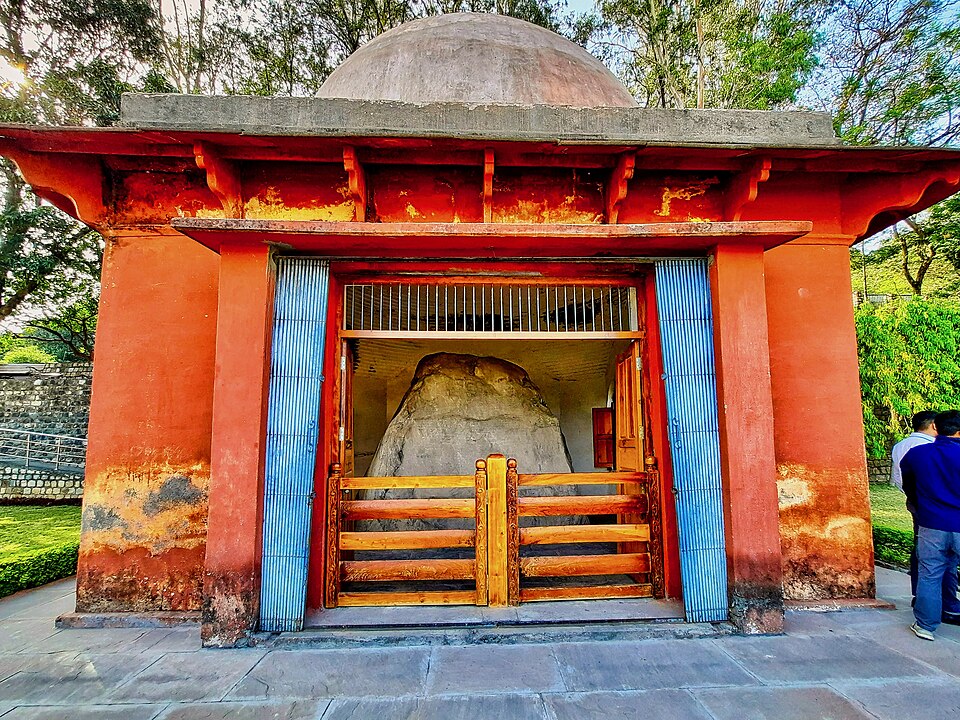
The first named rulers are the Kunindas, from around the 2nd century BCE, known mostly from their silver and copper coins found across the Shivalik and middle hills. Ashokan influence reached the edge of the hills, and a rock edict at Kalsi near Dehradun marks the Maurya empire's Himalayan doorstep.
Through the Gupta centuries the hills were a frontier of shrines and small chiefdoms. By the 7th century the Chinese pilgrim Xuanzang could describe kingdoms in this Himalayan belt, setting the stage for the first great hill dynasty, the Katyuris.
Key events
- PrehistoryRock paintings at Lakhu UdyarOchre rock art near Almora marks the region's earliest human traces.
- c. 3rd century BCEAshokan edict at KalsiThe Maurya empire's rock edict is carved at Kalsi near Dehradun.
- c. 2nd century BCEKuninda coinageThe Kuninda kings strike the hills' first coins.